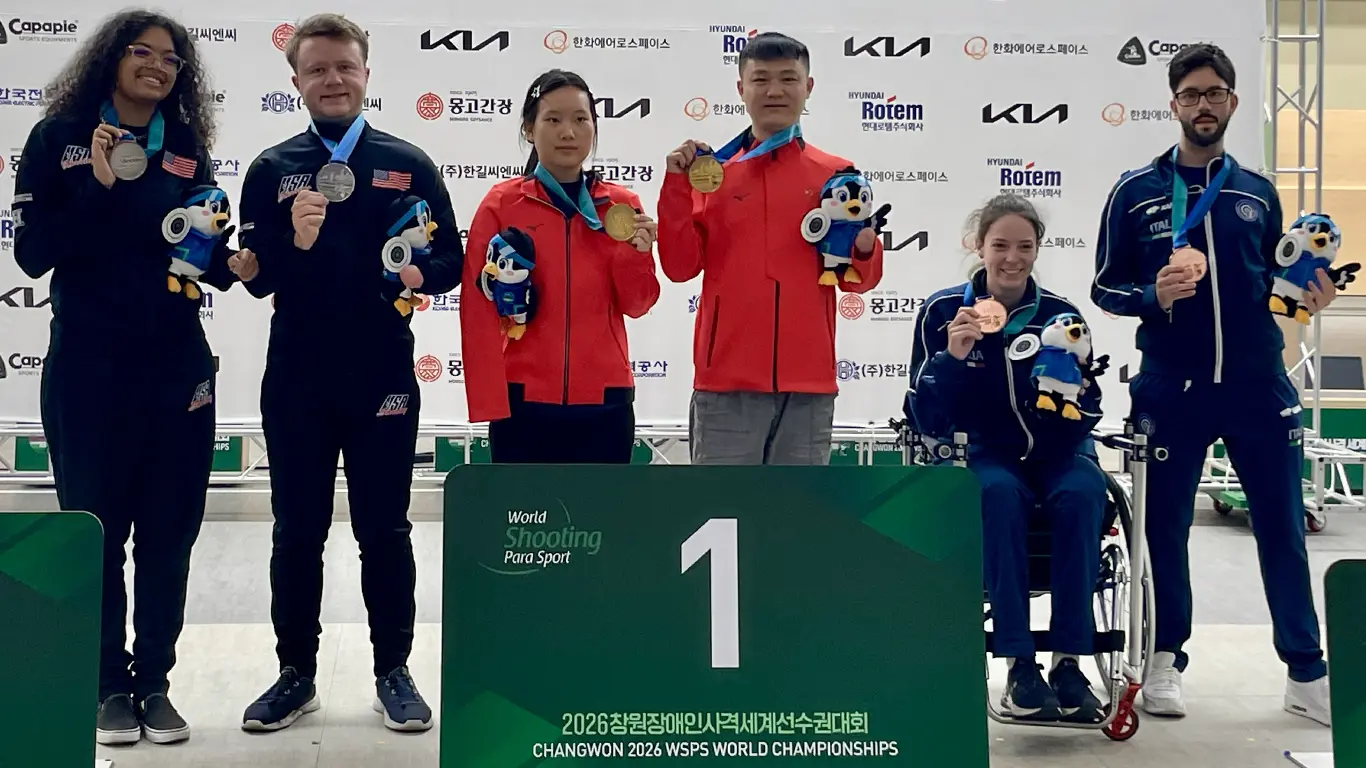
Inside Para shooting, auditory aiming, and the American athletes competing on the world stage
Most American shooters encounter Walther through a defensive pistol, a duty holster, or a training range. Thousands of miles from that familiar setting, another part of the shooting world tests the same fundamentals at an extraordinary level.
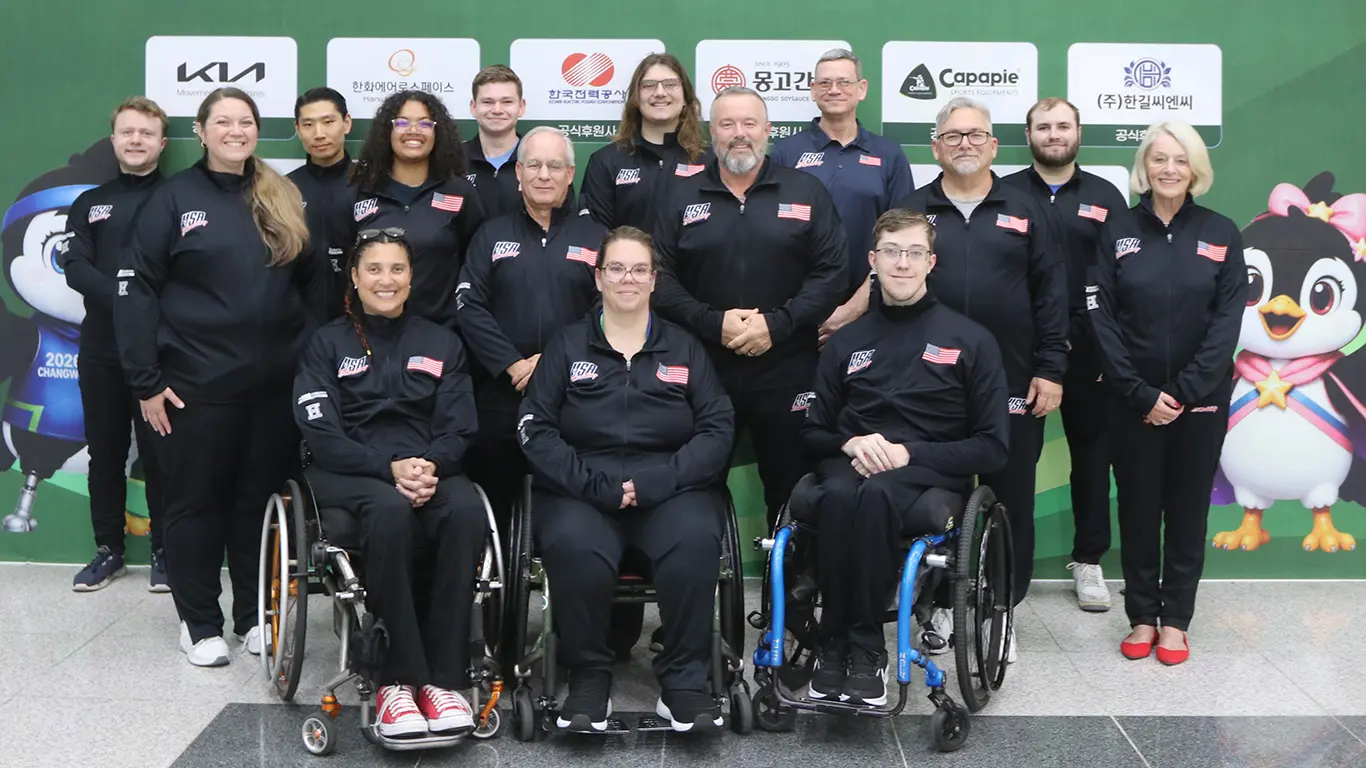
At the 2026 World Shooting Para Sport Championships in Changwon, South Korea, 324 athletes from 53 nations competed in rifle, pistol, Para trap, and vision-impaired rifle events. The field included Paralympic champions, world-record holders, young athletes in their first major international match, and a U.S. team working toward a home Paralympic Games in Los Angeles in 2028.
The championship offered a view of precision shooting that many people in the defense and firearms communities have never seen. Some athletes fired from wheelchairs or specialized chairs. Others used spring-mounted rifle supports or approved loaders. In the vision-impaired events, competitors aimed through sound. None of those adaptations changed the central demand of the sport: deliver a repeatable shot into a scoring area measured in fractions of a millimeter.
The American high point in Changwon
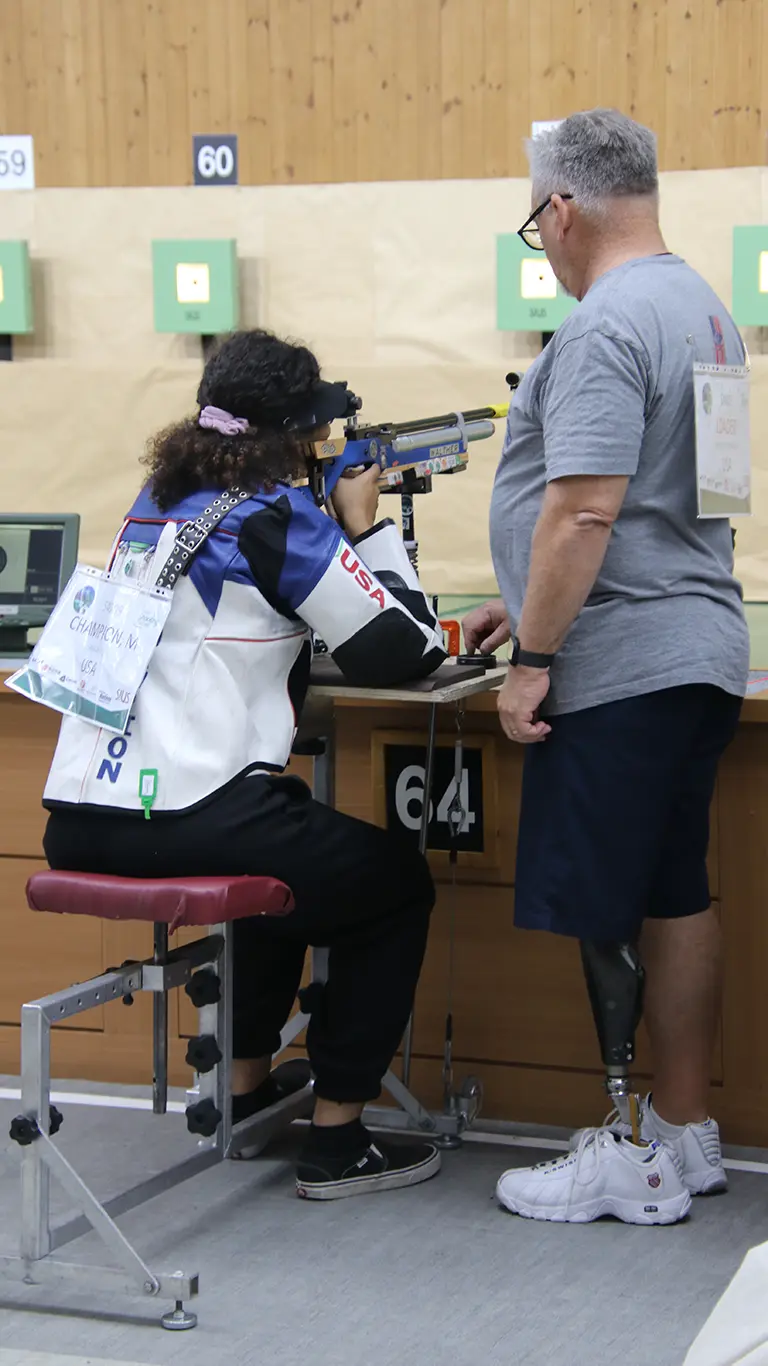
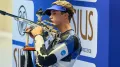
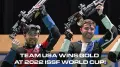
Team USA’s best result came from Madison Champion and Ben Hays in the R11 mixed-team 10-meter air-rifle prone SH2 event. The Americans scored 503.9 points in the final and earned silver, finishing only 0.7 points behind China’s Wang Ruo and Gao Jianxiong.
That margin is small enough to disappear within a handful of shots, but it also reflects the standard at a world championship. Finals use decimal scoring, with 10.9 representing the center of the target. At 10 meters, the rifle 10-ring is about 0.5 millimeters across, roughly the size of the period at the end of this sentence.
Champion and Hays delivered under that pressure against the strongest SH2 programs in the world. Their silver became the clearest American moment of the championships and an important marker for a U.S. Para program building toward LA28.
Changwon concluded on September 15 with host nation Korea leading the medal table at 21 medals, including 10 gold. Fifteen nations earned a combined 24 qualification slots for the 2028 Paralympic Games.
What Para shooting actually is
At first glance, Para shooting looks familiar because most of it is. Athletes compete on standard international ranges at 10, 25, and 50 meters. The firearms, targets, firing sequences, equipment control, and scoring demands closely follow international rifle and pistol competition. Para trap adds shotgun events for athletes with different physical impairments. The adaptations address how an athlete interfaces with the firearm; they do not change where the shot must land.
Classification keeps the competition fair by grouping athletes according to how an impairment affects the specific task. In rifle, SH1 athletes generally have a lower-limb impairment and support the full weight of the rifle themselves. SH2 athletes have an upper-limb impairment that requires an approved support stand to carry the rifle’s weight. In pistol, SH1 includes athletes with upper- and/or lower-limb impairments. A separate SH-VI class covers vision-impaired 10-meter rifle competition.
The visible equipment may include a shooting chair, table, spring stand, approved grip modification, loader, or other assistance documented through classification. The stand in SH2 does not lock the rifle onto the target. It supports weight while leaving the athlete responsible for body position, natural point of aim, sight or audio alignment, breathing, trigger control, and follow-through. The equipment compensates for a function. It does not award points.
When the target becomes sound
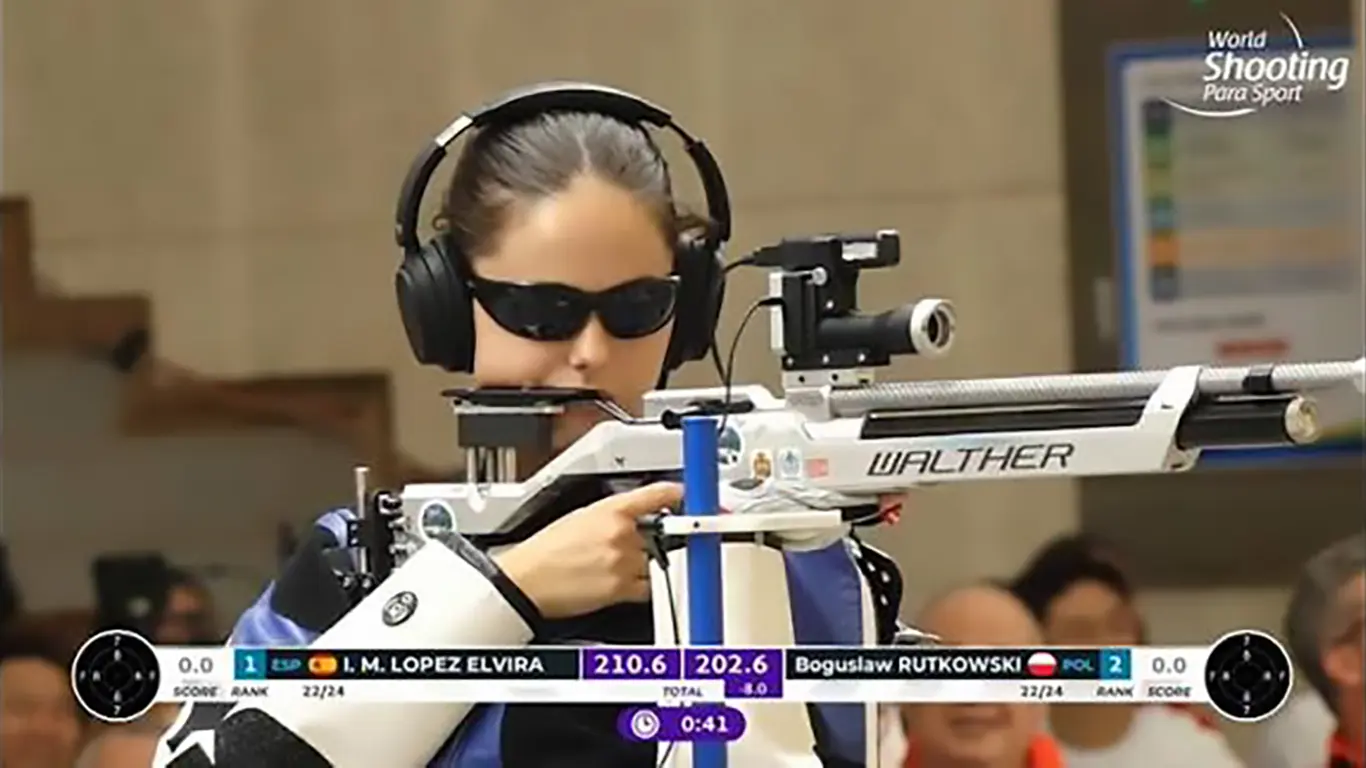
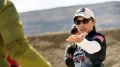
The most unfamiliar part of Changwon for many viewers was vision-impaired rifle shooting. The athlete uses a standard air-rifle platform fitted with an electronic aiming device. The system detects the rifle’s point of aim relative to the target and converts that information into an audio signal heard through headphones. As the muzzle moves closer to center, the pitch rises.
The sound is information, not automation. The system does not release the trigger, choose the moment to fire, or make the athlete stable. It gives the shooter a different sensory path to the target. The competitor must still interpret movement, settle the rifle, control the trigger, and execute a shot that will be scored against the same unforgiving geometry.
Changwon staged both standing and prone vision-impaired rifle events. Spain’s Isabel Maria Lopez Elvira, only 18 and competing in her first major international championship, won the standing title. Poland’s Boguslaw Rutkowski won the prone title on his World Championship debut. Vision-impaired rifle is part of the World Shooting Para Sport championship program, although it is not included among the 13 shooting medal events currently scheduled for LA28.
Walther and the U.S. Para program
Walther’s relationship with Para shooting reaches back well before Changwon. In 2021, the company entered a partnership with World Shooting Para Sport that included support for established athletes and programs developing new competitors. In 2026, Walther Arms committed travel support to USA Shooting’s Para program, helping protect access to the international matches where experience, rankings, and qualification opportunities are earned.
The connection is also visible at the athlete level. In a 2024 equipment interview, Madison Champion identified a Walther LG300 Alutec as her competition air rifle. Her path began on a high-school JROTC rifle team, where she picked up a rifle for the first time, then advanced to national records, international competition, and the Paralympic stage. Two years later, she stood with Hays as a World Championship silver medalist in Changwon.
For a national Para program, travel, equipment fit, technical service, and access to training are practical requirements. Support in those areas helps athletes spend their time solving the part no sponsor can solve for them: producing the shot when the match is on the line.
A military path into competition
The connection between military service, rehabilitation, and adaptive sport is part of the Paralympic movement’s origin. In 1948, Dr. Ludwig Guttmann organized the Stoke Mandeville Games for 16 injured servicemen and women. Their single sport was archery. That rehabilitation competition grew into the modern Paralympic Games.
American shooting has its own examples. Army soldier-athlete John Wayne Joss III was wounded by an improvised explosive device in Iraq in 2007 and later chose to have his right leg amputated. He took up competitive shooting during rehabilitation at Fort Benning, joined the U.S. Army Marksmanship Unit, and ultimately made three U.S. Paralympic teams. Fellow Army soldier-athlete Kevin Nguyen was wounded by an IED in Afghanistan in 2012. He learned about the Army Marksmanship Unit during rehabilitation and went on to represent both the Army and Team USA at the Tokyo Paralympic Games.
Their injuries changed how they trained and competed, but the standard remained unforgiving. Competitive shooting gave them a place to keep serving, representing the United States, and measuring themselves against the best athletes in the world.
Why the defense community should pay attention
The defense community already understands the importance of fitting equipment to the person and the mission. Stock dimensions, grip geometry, controls, stability, repeatability, and training all matter. Para shooting makes those relationships visible. Each permitted adaptation solves a specific physical interface problem while preserving the performance requirement.
That is what makes this side of the sport worth seeing. The chairs, support stands, loaders, and auditory sights may draw attention first. Stay long enough, and the equipment recedes. What remains is a firing line full of elite competitors managing pressure, body movement, timing, and consequence one shot at a time.
The most honest way to watch Para shooting is the same way we watch any world championship: study the position, follow the score, wait for the trigger break, and respect the result. Adaptation gets the athlete to the line. Performance determines what happens there.
Learn More
Credits:
- Team USA and medal photos: Jacqueline McCook
- Visually Impaired firing-line image: World Shooting Para Sport broadcast